These are the opening lines of D. H. Lawrence's famous (and infamous) novel, "Lady Chatterley's lover."
There is something about these lines that are just piercing, they just move something inside you!
Even I don't have a clue why I am moved by these lines, and I haven't read the novel yet.
I think the idea of everlasting hope and living despite the bad things that have happened to us and to the world is evergreen and true in almost any age and day.
I just watched this gut-wrenching movie. Set in late 1970s in Charkhi, a small village in Pakistan, the movie seamlessly links two events: the religious radicalization, bigotry, and hatred simmering in Pakistan in the 1970s and horrors of India's partition in 1947.
This was a debut feature by Sabiha Sumar (pic below), and it won a lot of accolades.
Sabiha Sumar
Some thoughts/points:
The movie basically revolves around Ayesha (Kirron Kher), a widow living in Charkhi with her son, Saleem. Saleem is a typical village lad who is enjoying his youth, fooling around. He is in love with Zubeidaa (Shilpa Shukla).
The period of 1970s in Pakistan was poisoned with radicalization. The process of radicalization and how it poisons young, noble minds is depicted in great detail.
The arrival of a Sikh delegation to the village brings back old memories of Partition time for Ayesha. I won't put any spoilers here, but the story is very engaging.
The movie is beautifully shot, with great attention to detail regarding Punjab during the time of Partition and also the rural life of Pakistan. The movie has a feel of authenticity that one can't help but notice.
The movie brilliantly depicts the horrors of partition, especially the treatment given to women by men. The movie shows the resilience of women after undergoing these horrors.
The lessons of history are soon forgotten by the people, it seems. That's the focal point of the movie I believe.
All in all, this is a great movie to watch. Do give it a try, you'll love it!
I have been a reader of books for a long time. I started with comics (Raj Comics and others popular with Indian kids who were born in the 80's) and was always interested in trivia books for some reason. We don't know how we are wired!
Anyways, I was really into non-fiction even when the term was not cool. I came to fiction really late, and I think I haven't arrived even now. I would read mostly motivation books, and also some memory improvement books over the years. Those books have been sold as scrap now, so I have a hard time recollecting what I was really into in those days.
I tried rather lazily several "systems" for keeping notes of books that I have read. I tried keeping those index cards, making proper notebooks for book notes. I succeeded in making notes for some books, but nothing really stuck.
One of the modest successes I have had recently is the use of Google Notes and Notion software on my phone and making notes of books I listen to while taking a walk. It is an easy system, I just type short notes as I walk. I make minor formatting thingies like chapters, bullets as I go, and emojis sometimes. Nothing fancy.
It works! I have been amazed at the simplicity of the system. One thing I have realized a while ago was that if I didn't make some sort of notes from a book, it was hard for me to come up with even a brief summary of the main ideas of the book. I couldn't remember any trivial fact or insight I had learned from a book if I didn't make notes. I know, basic shit. Took me a while. I know.
Here is a screenshot of Notion of my notes from a recent book I read recently. You can see that the notes aren't too detailed. But hey, better than nothing! As I heard one of my all-time favorite teachers, Eben Pagan, say in one of his courses (I can't remember which one): "The smallest pencil is more effective than the best memory."
So there is my "system." I hope to keep refining it, of course. But one thing I will do definitely is not quit on making notes from my books. It is almost a total waste of time if I don't take some sort of notes from a book.
This quote that I came across recently struck me odd at first. However, the more I thought about it, the more it made sense.
Poetry, indeed, cannot be translated; and, therefore, it is the poets that preserve the languages; for we would not be at the trouble to learn a language if we could have all that is written in it just as well in a translation. But as the beauties of poetry cannot be preserved in any language except that in which it was originally written, we learn the language. - Samuel Johnson, lexicographer (1709-1784)
I know English, Hindi, and Punjabi. I have read some poetry in all three languages. I have also read some Urdu ghazals translated into English. Samuel Johnson got it right: the translated poetry, although a valiant effort, does not ever come close to the impact, the rhythm, the cadence, and the spirit of the original. I know it sounds harsh, but that's the way it is. The original cannot be imitated. It is like the difference between actually eating something and describing the taste of something. The latter is a very remote echo of the real thing.
That being said, translations on their own can sometimes be great and even greater than original. I can only give examples from what I have read. One of the good examples I came across a while ago was Paradise Lost in Plain English by Joseph Lanzara. I had bought the Oxford Classics version of Paradise Lost and was totally lost (no pun intended). This book made the story very accessible, although I know there is a massive loss of the rhythm and cadence here, but better to read the thing and make sense of it than be turned off by it totally.
Anyhow, I think this whole thing is a total shame because when you know a language and are quite proficient in it, then only you can see the magic of poetry written in that language. Otherwise it does not click, your Rosetta stone courses be damned! There is a whole lot of time needed for someone to truly appreciate the language. Only then can they taste the poetry.
Mr. Johnson is right. Poetry is what keeps a language alive. It is also such a pity because so many languages have died and are dying every year. Think of the poetry that is also dying with it. And that is something we cannot revive with a handful of speakers. Would Paradise Lost be saved if we had 100 speakers of English left in the world? I doubt it.
Poetry is also concentrated thought. There are years and years of wisdom encapsulated in a single line of a poem. Poetry represents the sacred and exalted values of a culture. For example, consider these lines from Heer, an epic Punjabi poem written by Waris Shah:
Heer says, jogi you tell a lie, parted friends cannot be reunited
I have searched far and wide but have found no one, who can return those that have parted
The love story of Heer and Ranjha, as written by Waris Shah, also encapsulates here the beliefs of the people living at that time.
Now listen to or watch this version of the couplet as sung by Gurdas Maan, a popular Punjabi singer.
Ask any native speaker of Punjabi, and I doubt he or she will not be moved by the rendition. The same, however, cannot be said about the translation. It's a damn tragedy, but it is true nonetheless.
As we are witnessing escalations around the globe, I have seen how it is the powerless people--people without money and/or connections that are the most affected by wars.
It is the same story everywhere, and it doesn't change whether you are talking about a war in distant history or a modern 20th century conflict. The poor people get slaughtered, their fields get destroyed, their daughters and wives get abducted, and their belongings are snatched from them. Powerful people, on the other hand, have a very different fate. Although they also suffer casualties, the effects are much less predictable and depend on their proximity to power, wealth, and of course, just plain luck.
No wonder people cling to power and wealth so much. These are the only two things that save them, or at least have the potential to do so, in such uncertain times.
Look at what is happening in Palestine. Are the rich Palestinians suffering? Are the rich Israelis suffering?
The influence of power and wealth even affects how much we care about a conflict. How many of us care about what is happening in Yemen, or South Sudan? How many people can even locate these countries on the map?
Wars, at the end of the day, are immensely destructive. I hope we all can learn to live in peace.
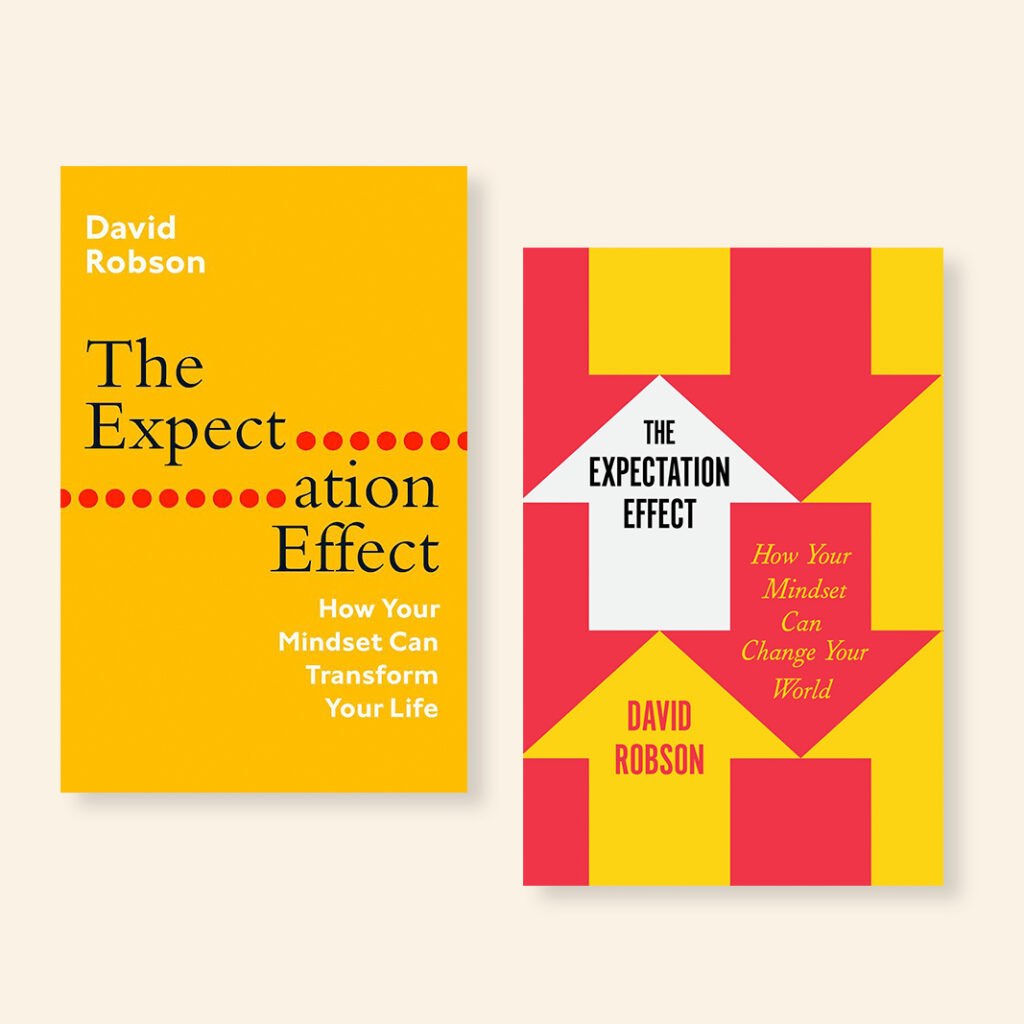
I listened to this book last month on the Audible app.
The book is written by David Robson (pic below), who is a science writer with a background in mathematics. He was a senior journalist at BBC Future for 5 years. His writing has appeared in the Guardian, the Atlantic, Aeon, Men’s Health, and many other publications.
Here are some of my main takeaways from the book. Check out the book here.
“The mind is its own place, and in itself can make a heaven of hell, a hell of heaven..” ― John Milton, Paradise Lost
This quote by one of the greatest poets of all time serves as both the literal and figurative starting point of the book. Our minds create our reality, our moods, our behaviors, our reactions, our emotions, and on and on. Our minds are running the show. Although outside events affect us, we exert a very strong influence on how much the outside events actually affect us.
Our brains are basically prediction machines. Our minds are always trying to predict the next thing in a sequence, whether it is something we are reading, watching, or hearing. These predictions are largely quite accurate; however, they can also lead us astray. We see what we predict rather than what's out there.
The placebo effect is a powerful proof of our mind's capacity to control our symptoms and behavior. The dark side of the placebo effect is the Nocebo effect, a phenomenon that is really puzzling, at least on the surface. Here is the Nocebo effect's definition: A situation in which a patient develops side effects or symptoms that can occur with a drug or other therapy just because the patient believes they may occur.
For example, in a clinical trial, patients who are not given an active treatment, but are told what side effects the active treatment may cause, may have the same side effects as the patients who are given the active treatment, only because they expect them to occur.
Both the effects make perfect sense if you consider the role of our brain as a prediction machine. It can create both positive and negative effects based on our own expectations about how things are likely to turn out.
Our minds can perform amazing feats under extreme stress. Consider the phenomenon of "hysterical strength." This is a display of superhuman strength shown by normal people when they encounter extreme, life-or-death situations. There have been numerous such reports, where a normal teenager is able to lift a whole car weighing several hundred kilograms in an accident. Where is this strength when the same teenager is exerting themselves in the gym? The answer is that our brains normally don't activate this strength. It is kept in reserve, and our systems work together to activate it in dangerous situations only.
Our attitude to stresses of our lives determines what we feel and the effects of stress. This comes back to our minds acting as a gatekeeper of how outside events affect us. Anxiety can actually be turned on its head when we "reframe" it as indicating that we are excited or aroused for an event. This reframing exercise was found to increase the performance of students appearing the GRE exam in a study.
Prayer, rituals, and superstitions are very powerful. Even nonbelievers can take advantage of such practices to enhance their willpower and focus. One can and should make their own rituals and stick to them to give our minds a boost.
Our minds also affect how well we age. The book details many super-agers, people who have kept up their abilities and zest for life well into the later years. In essence, a youthful mind is the real elixir of youth.
One example of a super-ager is Hiromu Inada, a Japanese athlete who started his athletic journey after his retirement in his 60s! He completed the Ironman championship in his 80s! An Ironman triathlon consists of a 2.4-mile (3.9 km) swim, a 112-mile (180.2 km) bicycle ride, and a marathon 26.22-mile (42.2 km) run completed in that order, a total of 140.6 miles (226.3 km).
Overall, this is a book that provides a lot of hope to the reader. Our circumstances and events of our lives may not be under our complete control, but there is a LOT under our control. Our thinking about the events of our lives and our attitudes toward them play a huge role in determining how strongly or weakly anything affects us.
The efforts of the anti-vaccine "activists" - podcasters, Youtubers, and "experts doing their own research" are bearing "fruit." Check out the news article here.
I hope the money they earned and the power they enjoyed was worth the death of these children.
Yesterday I came across this beautiful set of lines from Mr. Kuldip Salil, a professor of English Literature at Delhi University, albeit now retired. He has written numerous books and has translated famous Urdu poets to English and English poets to Hindi.
Here is Mr. Salil, narrating these lines in his own beautiful voice (Instagram reel), and here is an image from his Facebook page:
Here is a rough translation of these lines to English:
I learned to laugh at my own situation, I went beyond the border of laughter and tears. All the difficulties of life became easy, Even cruel fate fell in love with me.
I have thought a little about this concept earlier as well. I have a hunch this might be the philosophy behind the "Laughing Buddha," although I am not so sure. The whole concept makes sense to me.
This applies to both the various troublesome situations in life and also death. Our troubles seem suddenly tiny when we think it is all show and a short dance that we get to do before we return to the ground. We are just elements that have "come to life," just like a firecracker has come "alive" as it starts to burn. We are all burning and we all know what becomes of firecrackers the next day. Our time is just a bit more than that of a firecracker.
Life is short, and we all know how it ends. There are of course many ways of dealing with the inevitability of it, but in my opinion, laughing at it is probably the best strategy, although we should not be calling it a strategy, as there is no winning at the end of life. We are all destined to be dust - someday, and hopefully a very far off day, but the fate is sealed. So give yourself a good belly laugh when you think about your own mortality!
I have been watching the HBO comedy/news/documentary show "Last Week Tonight" for quite some time now. I think I have been watching it regularly for a few years at least.
Although the show is labelled as comedy, there is a lot of serious reporting and fact-checking that goes into making this show. I have decreased my news consumption over the past several months, but this one I do happen to watch when I get the time.
The most recent episode concerned the problems in and coming out of Twitter. The video is linked below if you are interested.
I have watched roughly one-third of it yet, and I hope to watch the whole thing today, fingers crossed.
It is such a sad story. I understand that business success requires having an ice-cold heart and a ruthless attitude, where one has to become a predator to chase profits and drive competitors out. However, how can one wreck so much havoc on society? Are money and power an end to themselves?
Elon is certainly a smart guy with a cunning sense of business. I do hope he realizes the damage being done to the citizens of US and other countries, as I am not sure if this is the legacy he wants to leave behind. It reminds me of the quote from the movie Gladiator - "What we do in life echoes in eternity." I hope he ponders somewhere along these lines.