As we are witnessing escalations around the globe, I have seen how it is the powerless people--people without money and/or connections that are the most affected by wars.
It is the same story everywhere, and it doesn't change whether you are talking about a war in distant history or a modern 20th century conflict. The poor people get slaughtered, their fields get destroyed, their daughters and wives get abducted, and their belongings are snatched from them. Powerful people, on the other hand, have a very different fate. Although they also suffer casualties, the effects are much less predictable and depend on their proximity to power, wealth, and of course, just plain luck.
No wonder people cling to power and wealth so much. These are the only two things that save them, or at least have the potential to do so, in such uncertain times.
Look at what is happening in Palestine. Are the rich Palestinians suffering? Are the rich Israelis suffering?
The influence of power and wealth even affects how much we care about a conflict. How many of us care about what is happening in Yemen, or South Sudan? How many people can even locate these countries on the map?
Wars, at the end of the day, are immensely destructive. I hope we all can learn to live in peace.
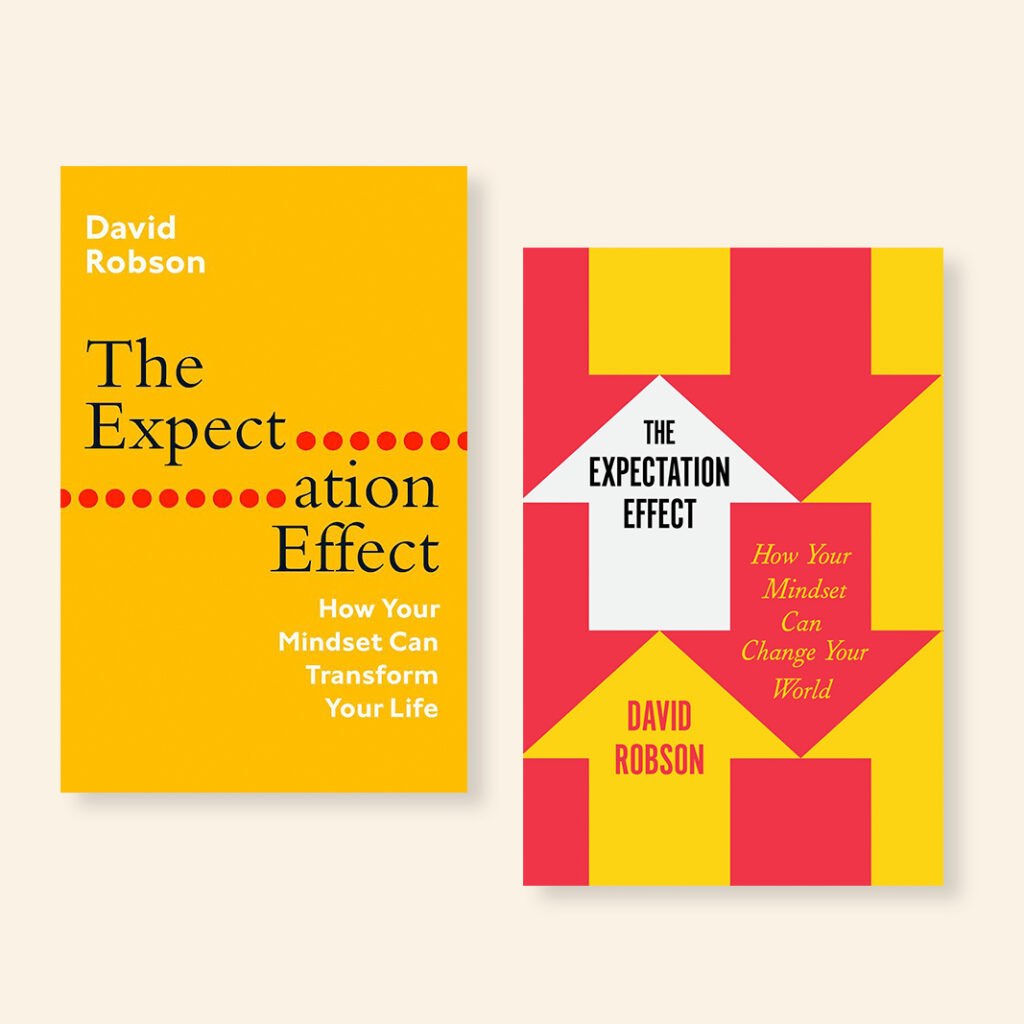
I listened to this book last month on the Audible app.
The book is written by David Robson (pic below), who is a science writer with a background in mathematics. He was a senior journalist at BBC Future for 5 years. His writing has appeared in the Guardian, the Atlantic, Aeon, Men’s Health, and many other publications.
Here are some of my main takeaways from the book. Check out the book here.
“The mind is its own place, and in itself can make a heaven of hell, a hell of heaven..” ― John Milton, Paradise Lost
This quote by one of the greatest poets of all time serves as both the literal and figurative starting point of the book. Our minds create our reality, our moods, our behaviors, our reactions, our emotions, and on and on. Our minds are running the show. Although outside events affect us, we exert a very strong influence on how much the outside events actually affect us.
Our brains are basically prediction machines. Our minds are always trying to predict the next thing in a sequence, whether it is something we are reading, watching, or hearing. These predictions are largely quite accurate; however, they can also lead us astray. We see what we predict rather than what's out there.
The placebo effect is a powerful proof of our mind's capacity to control our symptoms and behavior. The dark side of the placebo effect is the Nocebo effect, a phenomenon that is really puzzling, at least on the surface. Here is the Nocebo effect's definition: A situation in which a patient develops side effects or symptoms that can occur with a drug or other therapy just because the patient believes they may occur.
For example, in a clinical trial, patients who are not given an active treatment, but are told what side effects the active treatment may cause, may have the same side effects as the patients who are given the active treatment, only because they expect them to occur.
Both the effects make perfect sense if you consider the role of our brain as a prediction machine. It can create both positive and negative effects based on our own expectations about how things are likely to turn out.
Our minds can perform amazing feats under extreme stress. Consider the phenomenon of "hysterical strength." This is a display of superhuman strength shown by normal people when they encounter extreme, life-or-death situations. There have been numerous such reports, where a normal teenager is able to lift a whole car weighing several hundred kilograms in an accident. Where is this strength when the same teenager is exerting themselves in the gym? The answer is that our brains normally don't activate this strength. It is kept in reserve, and our systems work together to activate it in dangerous situations only.
Our attitude to stresses of our lives determines what we feel and the effects of stress. This comes back to our minds acting as a gatekeeper of how outside events affect us. Anxiety can actually be turned on its head when we "reframe" it as indicating that we are excited or aroused for an event. This reframing exercise was found to increase the performance of students appearing the GRE exam in a study.
Prayer, rituals, and superstitions are very powerful. Even nonbelievers can take advantage of such practices to enhance their willpower and focus. One can and should make their own rituals and stick to them to give our minds a boost.
Our minds also affect how well we age. The book details many super-agers, people who have kept up their abilities and zest for life well into the later years. In essence, a youthful mind is the real elixir of youth.
One example of a super-ager is Hiromu Inada, a Japanese athlete who started his athletic journey after his retirement in his 60s! He completed the Ironman championship in his 80s! An Ironman triathlon consists of a 2.4-mile (3.9 km) swim, a 112-mile (180.2 km) bicycle ride, and a marathon 26.22-mile (42.2 km) run completed in that order, a total of 140.6 miles (226.3 km).
Overall, this is a book that provides a lot of hope to the reader. Our circumstances and events of our lives may not be under our complete control, but there is a LOT under our control. Our thinking about the events of our lives and our attitudes toward them play a huge role in determining how strongly or weakly anything affects us.
The efforts of the anti-vaccine "activists" - podcasters, Youtubers, and "experts doing their own research" are bearing "fruit." Check out the news article here.
I hope the money they earned and the power they enjoyed was worth the death of these children.
Yesterday I came across this beautiful set of lines from Mr. Kuldip Salil, a professor of English Literature at Delhi University, albeit now retired. He has written numerous books and has translated famous Urdu poets to English and English poets to Hindi.
Here is Mr. Salil, narrating these lines in his own beautiful voice (Instagram reel), and here is an image from his Facebook page:
Here is a rough translation of these lines to English:
I learned to laugh at my own situation, I went beyond the border of laughter and tears. All the difficulties of life became easy, Even cruel fate fell in love with me.
I have thought a little about this concept earlier as well. I have a hunch this might be the philosophy behind the "Laughing Buddha," although I am not so sure. The whole concept makes sense to me.
This applies to both the various troublesome situations in life and also death. Our troubles seem suddenly tiny when we think it is all show and a short dance that we get to do before we return to the ground. We are just elements that have "come to life," just like a firecracker has come "alive" as it starts to burn. We are all burning and we all know what becomes of firecrackers the next day. Our time is just a bit more than that of a firecracker.
Life is short, and we all know how it ends. There are of course many ways of dealing with the inevitability of it, but in my opinion, laughing at it is probably the best strategy, although we should not be calling it a strategy, as there is no winning at the end of life. We are all destined to be dust - someday, and hopefully a very far off day, but the fate is sealed. So give yourself a good belly laugh when you think about your own mortality!
I have been watching the HBO comedy/news/documentary show "Last Week Tonight" for quite some time now. I think I have been watching it regularly for a few years at least.
Although the show is labelled as comedy, there is a lot of serious reporting and fact-checking that goes into making this show. I have decreased my news consumption over the past several months, but this one I do happen to watch when I get the time.
The most recent episode concerned the problems in and coming out of Twitter. The video is linked below if you are interested.
I have watched roughly one-third of it yet, and I hope to watch the whole thing today, fingers crossed.
It is such a sad story. I understand that business success requires having an ice-cold heart and a ruthless attitude, where one has to become a predator to chase profits and drive competitors out. However, how can one wreck so much havoc on society? Are money and power an end to themselves?
Elon is certainly a smart guy with a cunning sense of business. I do hope he realizes the damage being done to the citizens of US and other countries, as I am not sure if this is the legacy he wants to leave behind. It reminds me of the quote from the movie Gladiator - "What we do in life echoes in eternity." I hope he ponders somewhere along these lines.
Just watched this movie yesterday. A bit slow, but overall a good watch, with plenty of food for thought.
Here is the plot:
Set in The Irish Midlands in 1862, the story follows a young
girl, Anna O'Donnell, played by Kila Cassidy, who stops eating but remains miraculously alive and well. English
nurse Lib Wright (played by Florence Pugh) is brought to a tiny village to observe eleven-year old
Anna O'Donnell. Tourists and pilgrims mass to witness the girl who is
said to have survived without food for months.
Related fact: The movie is based on a novel of the same name written by Emma Donoghue.
Here are some of my observations, what I liked and didn't like about it, my two cents:
The movie is beautifully shot, showcasing the bleak but vast landscape of the Irish Midlands.
The background music was a bit too creepy and intruding, should have been avoided at all
The tension between Religion and Science, or more accurately, Blind Faith and Science, is depicted engagingly. There is a reference to the prevailing theories of that time, including "magnetism" and "vital force."
The movie did a nice job investigating the subject and the topic without moralizing or depicting faith or science in a particularly bad light.
The role of different women in supporting or acting against other women is one of the subtle themes of this movie
The pace of the movie seemed glacial, with a lot of dead space. I had to fight my sleep watching some segments.
The movie is set around the great famine in Ireland (1845-1852).
According to the information provided in the movie in the beginning, the
Irish blamed the English for this catastrophe. This information is
important, because Lib is a nurse and she is English, and therefore, her
testimony is seen with a lot of suspicion.
On the whole, this was a good watch. Do give it a watch, and do let me know your thoughts.
Hinduism is a very "diffuse" religion and is quite different from the other "dominant" religions of the world, i.e., Christianity and Islam. In that sense, it closely resembles the other prevalent religions of the East, e.g., Buddhism and Jainism. I am talking here about the reverence accorded to its ancient texts and scriptures, the sacred books.
My observations in this post will be more familiar to a practicing Hindu in India than to Hindus elsewhere or to followers of other religions. I have observed a very casual disregard of daily or regular reading of holy texts among Hindus on one hand and fierce egoism and touchiness regarding their content on the other.
In recent times of viral content, reels, and social media, there have been quite a few "controversies" regarding the content of one or the other Hindu holy books. There is the evergreen and never-ending debate on casteism, as well as zealotry on the topic of vegetarianism, misogyny, sexual content, and how much and how accurate is the Science present in the holy books. I like to read books, and although I am not a great or fast reader by any measure, I am still baffled by the lack of interest among Hindus in actually reading, scrutinizing, and critically analyzing their own foundational texts.
I can think of a few reasons for this reluctance. Here they are, in no particular order:
1. The absence of universally recognized holy texts in Hinduism - this is I think the biggest reason. Unlike Christianity, Islam, and Sikhism, who have their Bible, Quran, and the Guru Granth Sahib, there is no "one text to rule them all" in Hinduism, a book accepted by all Hindus to be holy. Ramayana may come the closest to be the definitive one, but there are 2 very different versions in circulation - a Sanskrit one written by Valmiki, and a Hindi one written much later by Tulsidas.
Mahabharata comes second, but it is HUGE, and keeping it at home is considered unlucky as it is basically one long story of two groups of brothers fighting and killing each other. Bhagwat Gita is one small sliver from the Mahabharata and contains philosophical messages in the form of a sermon given by Shri Krishna, the incarnation of Lord Vishnu. Lord Vishnu is one of the 3 main Hindu gods who are considered to form the holy trinity - Brahma, Vishnu, and Shiva. Because of its philosophical/motivational teachings, Bhagwat Gita is probably the holy book with the largest presence in Hindu homes.
2. The emphasis on Gurus - Gurus hold a special place in Hinduism. A guru is a teacher, and in the context of Hinduism, gurus are spiritual teachers. A student is called a "Shishya," and the Guru-Shishya relationship is considered sacrosanct in Hinduism. Sure, Christianity has its pastors and Islam has its Mullahs, but Hindu gurus are in a league of their own.
Because Hindus don't read their holy books, we have a huge number of charlatans and fake gurus who keep spouting nonsense and citing the scriptures. And people keep on believing these fakers because who has the time to go and fact-check?
3. The absence of a reading culture - Hindus in general do not have a reading culture. Reading for pleasure, reading for knowledge, and reading for understanding the world are quite rare. This phenomenon has many roots, but the main one is the emphasis on grades in schools, colleges, and universities. Children and young folks are tortured for good grades and marks, so much that at the end, good grades and marks become the only measure of learning. So learning for learning's sake is tossed into the dustbin. This is changing, I think and hope, but this is still largely the case for most of the Indian academia.
4. Sanskrit - Although exalted and revered, Sanskrit can be tough to read in original. I don't think a large section of readers who actually read sacred Hindu texts read the original Sanskrit. However, it is the language in which most of the sacred texts were written. Still, translations are almost always available, at least for the "main" texts, so this is quite a lousy reason.
I think the problem is a bit deeper. Hindus do not have the absence of a reading culture, but what they have is the absence of a "critical thinking" and "reasoning" culture, because reading is only a tool for better thinking about the world and our place in it. Sorry I do not have a ready-made cure for this ailment, but I hope I have given my two cents for the diagnosis at least.
The following article may be of interest to someone interested in exploring this issue in more detail: Check it out here.
Languages are fascinating. Essentially, these are just sounds we make with our mouths (of course!). However, the effects of these sounds are just magical.
Writing is said to be revolutionary, a pathbreaking event in our evolution as a communicating species. However, I think formation of a language, especially the first languages, must have taken a long, long, time. How much? We have no idea, none at all!
Precisely because writing leaves at least some residue, a clay tablet here, a rock scribble there, so it is easy to date a script and chart its evolution from squiggly symbols to defined characters with meaning. But what about words? Without the accompanying script to light the way, we have no way to trace how certain words were formed, how things were named, and also, most importantly, how the early languages survive, if at all, in the modern, extant languages.
A recent book is on my radar - "Proto" by Laura Spinney (affiliate link). It tells the story of one of the mother languages of the earlier times, Proto Indo-European (PIE), that later gave birth to so many of the most widely spoken languages of today. I have been fascinated with this language for some time, after reading about it in the wonderful book "India Discovered" by John Keay (affiliate link). It tells the story of Sir William Jones, a Welsh scholar and judge, who founded the Asiatic Society in Calcutta in 1784.
Jones was fascinated with Indian culture. Quoting from Wikipedia,
"He studied the Vedas with Rāmalocana, a pandit teaching at the Hindu University of Nadiya, becoming a proficient Sanskritist. Jones kept up a ten-year correspondence on the topic of jyotisa or Hindu astronomy with fellow orientalist Samuel Davis. He learnt the ancient concept of Hindu Laws from Pandits.
In his Third Anniversary Discourse to the Asiatic Society (1786) he suggested that Sanskrit, Greek and Latin languages had a common root, and that indeed they might all be further related, in turn, to Gothic and the Celtic languages, as well as to Persian. Although his name is closely associated with this observation, he was not the first to make it."
Here is a screenshot from a video explaining how Jones discovered, or hypothesized, PIE.
The video is located here, and it is quite an interesting one. Here is another useful screenshot from the video, showing the similarity between Latin, Greek, Gothic, and Sanskrit. The discovery must have been a "Eureka" moment for Jones.
However, I digress. PIE or its sister languages, would still be quite the latecomers. I am thinking of a time several decades or hundreds of years before PIE had the time to develop.
How did the first humans come together as groups? How did they then develop sounds to represent words? How did they then make sure that these sounds were somehow preserved across generations in the absence of any written records?
We may never find the answers to these questions. But, we never know what the future holds for us. Maybe we will have a technology to analyze our past using a different technique that may shed light on this fascinating part of our history.
Technology, especially information technology (IT), can be very seductive. Some of the highest-paying jobs in the world for the last few decades have been in IT.
Computers, number-crunching, beautiful wallpapers on desktops, displays in NYC Times Square, video games, social media--IT and electronics have totally transformed how our world looks and operates.
It is indeed wonderful, especially how convenient things and processes have become as technology has become infused into almost every aspect of our lives. From electric toothbrushes to sleep-tracking apps, our lives are surrounded by technology. And the infusion/penetration of technology is only going to increase.
There are many, many uses of this infusion. I especially like how we can lead better, healthier lives using technology. I think that the increasing availability of technology to track our sleep, meals, and movement will hopefully inspire more and more folks to avoid disease and promote good health as opposed to just treating disease.
There can be a lot of cynical ways of looking at these developments. However, let's be a pollyanna for a moment and show some gratitude for this wonderful tool that we have in our arsenal today.
Kindness is one of the most mysterious virtues. It is definitely a product of evolution but what a weird product it is!
Kindness is also very fuzzy. What is kindness, anyway? It is mercy, it is forgiveness, it is sympathy, it is overlooking of any past transgressions, it is doing someone a favor when they probably haven't done anything to deserve it.
I posted a quote on my WhatsApp status yesterday as a "thought for the day" that ties into this concept. It is by Victor Hugo, the famous novelist who wrote "Les Miserables," among other works.
"The greatest happiness of life is the conviction that we are loved -- loved for ourselves, or rather, loved in spite of ourselves. - Victor Hugo (1802-1885)"
The money part of the quote is, of course, the part where "we are loved in spite of ourselves." Ah! this quote is so deep! It captures so many different facets of our lives. Isn't that what true love is? True affection, selfless love, it boils down to kindness, isn't it?
Kindness doesn't "work" everywhere and in every situation. However, in my limited experience, a little bit of courtesy and kindness go a long way in making things smoother.
Another interesting take on this issue is this quote from Lord Byron:
He who is only just is cruel. Who on earth could live were all judged justly? - Lord Byron, poet (1788-1824)
We want justice for others, but I think in our hearts of hearts, we all want kindness instead of getting our "just desserts," don't we? We all yearn to live in a kind world.
I think kindness and love are two superpowers that can turn one's relationships and daily encounters into something very pleasant and have the power to add sweetness to our lives.
Humans are complex creatures. I think that a large part of it is due to our very complex brains that evolved over millions of years ago. With large brains came a lot of concepts later - group living, social nature, tribes, villages, cities, and now humanity on the whole Earth is connected into one single entity.
So we have complex brains and using these complex brains, we created complex structures with rules, ethics, languages, verbal and non-verbal communication modes, body language, cultures, religions, moral codes, it's a lot!
Just think of any mundane interaction between two human beings. Let's say a security guard is checking someone entering an apartment complex during a lazy afternoon. Now you can think of this interaction going down numerous ways based on the identities of the two people, their sexes, ages, cultures, presence of weapons, body type, body language, symbols of wealth, etc. I could go on and on, but hope you get the gist. You can also change the setting of this scene and have dramatically different outcomes. Think of this scene happening in a rich estate in London, in Israel, in a border area between two countries fighting a war, and the amount of tension or number of interactions just explodes.
I see folks around me and some of them have learned how to successfully navigate the complex human society and its myriad interactions. They are quite successful in terms of handling people and situations. I also see a few folks, some very near to me, that have taken just a slightly different path while navigating human relationships and ended up being bitter and cynical. Although the above two categories of people have dramatically different outcomes, my hunch is that there are only a handful of events that actually made these two trajectories so different.
Ancient folk traditions and animal tales had a lot of fascination around the concept of chimeras. A chimera was a mixture of 3-4 different animals. Many cultures have them, so it is not something unusual conjured by a particular group of people or culture only. I think humans are chimeras too, although I am not sure we are animal chimeras. My guess is that the chimeric nature of humans comes from the chimeric nature of our complex brains. Our brains have to process a lot of different streams of information at the same time. Therefore, the output can be very mixed, and it throws people off balance.
Politics, business, relationships, adversity, these are all situations where our ability to process what the other people are thinking, how to get them to do what we want, and marshal our resources to make a particular outcome more probable all come together. That's why I think handling people and relationships is the foundation stone of all success, whether it is personal, interpersonal, or material.
Out of I don't know where, I recently started walking. Recently means July 2025, so about 6 months ago. I got an ad-loaded free pedometer app on my phone, a new pair of cheap sneakers, and that was basically it.
One of the possible sources of this new habit of mine may be my reading of the excellent book "Exercised" by David Lieberman. One of the sentences in that book struck a chord with me.
"If
you are a typical person who barely exercises, it would take you just
an hour or two of walking per day to be as physically active as a
hunter-gatherer."
I remember reading this and my immediate
thought was - "That's it ?" I can be Tarzan (well, not Tarzan, but you
get my gist) just by an hour or so of WALKING? I thought I will have to
chase and kill a gazelle with my bare hands every week to qualify for
that! Sign me up!
I should post a detailed book review/summary of it here soon, it's a very funny and well-written book.
I feel a general sense of "good health" now. My skin looks better, I feel much better, and I think I am addicted to walking now. If I miss a day, I get withdrawal symptoms and I feel crappy almost the entire day.
I do a morning walk most days and I have found it gives a nice sense of accomplishment right as the day starts.
The park where I walk everyday.
Walking is great as I can kill two birds with one stone. I love listening to audiobooks and podcasts and the daily walk gives me a very nice, 1 hour of listening everyday. I usually finish a book in around 10 days. With that, I should be able to finish at least 20-25 books in an year. I have an audible subscription to go with that, and it comes with tons of free books on top of my 12 that come as credits during an year.
I don't feel sluggish in the afternoon. Earlier I used to sleep in the afternoon on a pretty regular basis. However, after I started walking, I have found that my energy levels remain quite high throughout the day.
My grandfathers on both the father's and mother's side (Dadaji and Nanaji in Hindi/Punjabi) were great walkers and walked very long distances on a daily basis. I think part of my inclination comes from that.
I hope to keep up this practice. I have a feeling that walking is severely underrated as there is not a lot of money to be made with the advice to just walk. It definitely beats doing nothing. Also, walking is nowhere as difficult as any of the exercises listed in any exercise manual or strength-training program. Not everyone can or should deadlift a heavy weight, but most folks can walk.
Also, walking is mostly risk-free. I did have a lot of pain in the beginning, and some days it was hard for me to get out of bed as my feet were killing me, but I rammed through those days and now walking is rarely if ever painful. I think it was due to poor technique and/or my weight.
One of the rules that I live by is that except actual rocket science, things are quite simple and not rocket science. Businesses and marketers/scammers have a tendency to make things overly complicated, and we follow their advice to our peril. Most, if not all, things are quite simple. Not easy, but simple.
O Death, probably the only certain event in the life of human beings!
Death has fascinated almost everyone at some point in their lives. Naturally, as art imitates life, artists have tried to portray what they understand about death in their art.
Le Char de la mort, translated as “The Chariot of Death”, is an allegorical painting by Jules Theophile Schuler (1821-1878). According to the Merriam-Webster Dictionary, an allegory is "the expression of truths or generalizations about human existence by means of symbolic figures and actions.” So an allegorical painting is basically a painting that depicts something, while talking about something else.
Here is an image of Schuler I found on Wikimedia Commons:
This is a beautiful painting with many parts. I currently have it as my PC wallpaper, although I think I would appreciate its nuances much more if I had a large poster made out of it.
I watched this video for a brief summary of the painting. The video is in French, but one can switch on the auto-translated English subtitles. I love technology when it works!
Surprisingly, I didn’t find many videos explaining this painting. I have weird interests 🙂
The painting was created in the interval of years 1848-1851.
This is a HUGE painting! See this screenshot:
The backdrop for the creation of this painting was a regime-changing revolt in Paris that occurred in February 1848. Its violence and destruction probably left a lasting impression on Theophile.
The painting has a pyramid-shaped structure, with allegorical figures depicted in it. The chariot is driven by 13 horses. Seven horses are shown in skeletal forms and 6 in flesh. The first “flash horse” (extreme left) is already “in the shadows.” You can also see sparks under their hooves, probably signifying the speed of the death chariot.
At the lower right is the traditional depiction of death as it was popular in medieval times onwards, i.e., as a skeleton. Death is grabbing and dragging an execution with his right hand, while with his left hand, he is signaling “The Wandering Jew” to go away. According to Wikipedia, “The Wandering Jew” (occasionally referred to as the Eternal Jew, a translation of the German "der Ewige Jude") is a mythical immortal man whose legend began to spread in Europe in the 13th century. In the original legend, a Jew who taunted Jesus on the way to the Crucifixion was then cursed to walk the Earth until the Second Coming.” This is an interesting juxtaposition and a biblical connection.
However, the new development in this painting is the depiction of death as an angel with black wings. She is driving the chariot.
At the top of pyramid is Dante Alighieri, famous for the divine comedy, his “guided tour” of hell, purgatory, and paradise.
The backdrop of the painting is dominated by “Christ on cross” in the extreme top left- the ultimate symbol of Christian salvation.
Right below Dante is the depiction of arts in the form of a lyre and a painter. The painter is Schuler himself! He is one on the right in a white “top” or whatever the garment is called.
Below this depiction are the 3 forms of love - conjugal love, love between siblings, and the love of a mother for her child. The mother depicted is modeled on Schuler’s sister.
The events of 1848 had a huge impact on Schuler. You can see the French “revolutionary” flag in tatters in this painting, also seen in the famous “Liberty leading the people” painting by Eugène Delacroix (shown below).
The regime change that happened in 1848 is depicted by an old king who has his crown flown away from him.
A greedy moneylender is shown at extreme right. His coins are shown flying away in the wind. I think it signifies that death takes away the man, and a man’s wealth is left behind.
There are a few other notable figures in the painting as well. We have the pope here, with his bible, and keys of St. Peter pointing towards the sky. These are the keys of heaven. According to Wikipedia, this concept is explicitly referenced in the Bible in Matthew 16:19. Here is an accepted translation:
"I will give you the keys of the kingdom of heaven; whatever you bind on earth will be bound in heaven, and whatever you loose on earth will be loosed in heaven."
Then we have Masaniello. This is an interesting figure. According to Wikipedia, Masaniello was an Italian fisherman, who led the Neapolitan Revolt of 1647 against the rule of Habsburg Spain in the Kingdom of Naples. He is wearing a red cap. This is a Phrygian cap, and according to Encyclopedia Britannice, “…it became an emblem of liberty during the French Revolution (1787-1799). It was adopted by the revolutionaries as “the red cap of liberty” and continues to be associated with the national allegorical figure of Liberté. “He is the only figure in the painting sitting confidently, not at all afraid of death.
We also have an old man with an hourglass, in a posture similar to that of “The Thinker,” contemplating death.
The painter reflects on his own mortality in the painting as well. Smack in the middle of the painting, we find a grave marker bearing the name of the painter.
The whole “scene” is lit from the left. This may be a reference to how death eventually leads to heaven or may have some other meaning that I am not aware of.
A beautiful painting overall, deeply seeped in the events happening at the time it was painted, but also strangely relevant today as well. Human nature and its flaws don’t change that quickly.
This was a fascinating listen. Here is the description from BBC's podcast page:
Former Christian minister Craig Fenter was in the midst of a deep
spiritual void when he first picked up a book of Mevlana Jalaluddin
Rumi’s poetry in his local LA bookshop. The writings of Rumi, a
13th-Century Persian poet, Islamic scholar, and Sufi mystic have long
inspired people across faiths. And Rumi’s poetry on divine love and the
soul’s journey toward God would captivate Craig, inspiring him to leave
behind his Californian home, to begin a new life as a whirling dervish
in Turkey. The BBC’s Emily Wither travelled to meet Craig Fenter, now
known as Ismail, in the central Anatolian city of Konya, Rumi’s resting
place and an important pilgrimage site for his followers. It is here
where Ismail joined the Mevlevi order, became a disciple of Rumi and
converted to Islam. Ismail is now working on a new English translation
of Rumi’s most famous work, the Masnavi-yi Maʿnavi, 25,000 verses of
rhymed couplets in Persian.
In India, Ayurveda is often seen as “natural” and therefore automatically “safe”. Millions consume Ayurvedic medicines without consulting a doctor. The government, too, promotes Ayurveda globally as part of India’s soft power.
But important questions remain. While every claim and side effect of modern medicine must pass through clinical trials and strict regulation, is Ayurveda held to the same standards? The word “natural” inspires trust. But has it also become a convenient shield against scientific scrutiny?
A tradition described as safe and reliable is now being packaged as a global brand. But is Ayurveda truly risk-free? Does being “natural” guarantee the absence of side effects?
Are Ayurvedic medicines tested through clinical trials? If yes, how large and transparent are these studies?
Why are many Indian Ayurvedic products exported abroad as “food supplements” instead of medicines? Is this a way to bypass stricter regulatory checks?
Advertising claims are under the scanner too. Treatments for diseases that legally cannot be advertised are still openly promoted. From fertility cures to claims of treating serious illnesses like cancer, the promises are big. But where is the evidence?
And when side effects emerge, or when harmful levels of mercury or lead are found in products, what action does the system take? Who is held accountable?
This documentary investigates these questions, and examines what the government is actually doing on the ground to make Ayurveda safe, credible, and trustworthy.
This documentary was produced with support from the Thakur Foundation.